Autonomous organization
An independently running organization with its own members, roles, shared state, and ongoing work—not merely a set of agents spawned for the human.
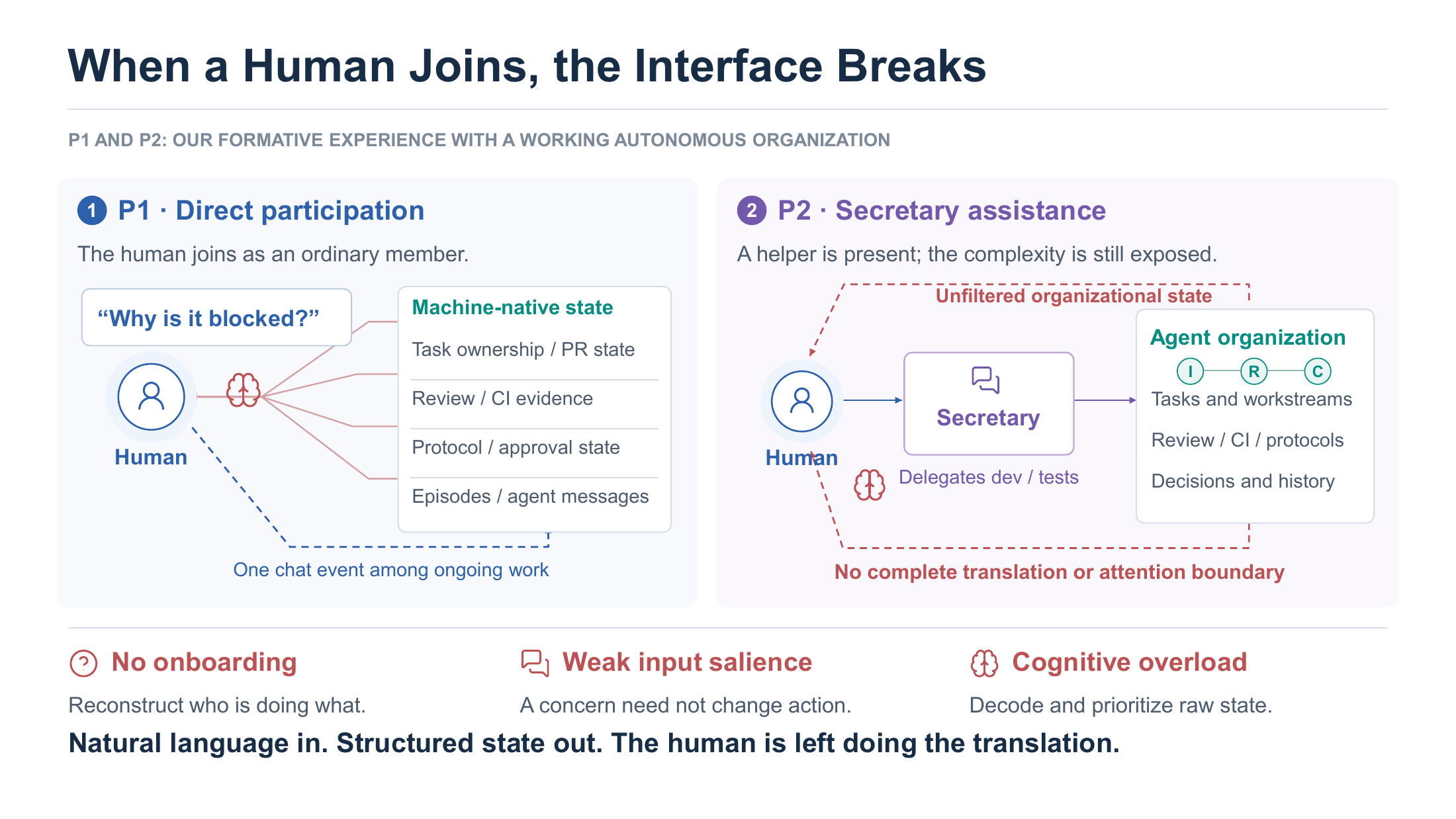
How do you participate in an organization that is already working?
The RELIC appendix compares direct participation (P1), transparent liaison (P2), and liaison-first interaction (P3). Each design brings human intent into a running organization without turning the human—or their secretary—into its global manager.
Autonomous organizations expose workstreams, review histories, approvals, and machine-native events. The design progression asks how a person can understand and participate without continually reconstructing that state.
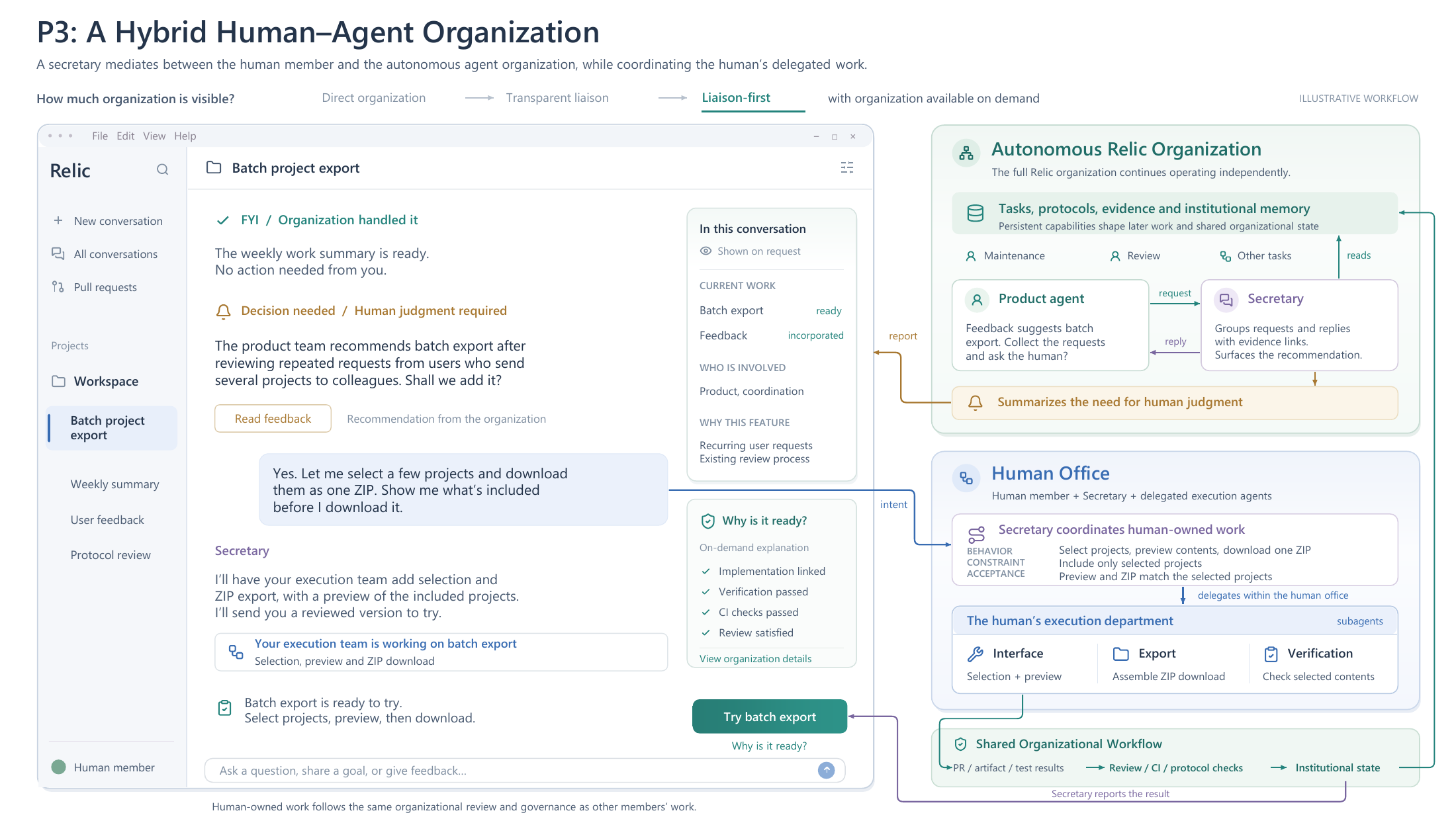
A secretary presents relevant updates, explicit decision requests, and explanations on demand. Goals travel back into structured work, while the autonomous organization continues independently.
An independently running organization with its own members, roles, shared state, and ongoing work—not merely a set of agents spawned for the human.
A human, their secretary, and delegated execution agents. The secretary coordinates the human’s work and explains relevant organizational state.
Human-owned deliverables return to the same review, tests, and protocol checks as work from autonomous members.
 View original
Routine status and urgent decisions need different attention patterns.
Ambiguous intent calls for clarification, not an automatic override.
A batch-export request illustrates progressive disclosure. These example states explain the interface design; they are not execution logs or user-study findings.
The human-owned work needs an acceptance criterion before implementation. The secretary brings the decision into view with its context.
The work unit needs you to specify the output format and what should happen if one item fails. The liaison can explain the tradeoff; it does not silently decide on your behalf.
Waiting for clarification · no change has been executedThis is an exploratory extension of RELIC, grounded in the appendix’s interface designs and illustrative workflows. It is not presented as a separately validated HCI system or a completed comparative user study.
Direct participation, a transparent liaison, and liaison-first interaction: the P1–P3 design progression in the RELIC appendix.
Research note · 4 min readQuestions and perspectives on this page are welcome.
This conversation belongs to Human–Agent Organization. Comments appear only after review. For contact details or personal matters, use the private message form.
Loading comments…